You’re Hosting a Serious Event for Serious People. Don’t Embarrass Yourself.
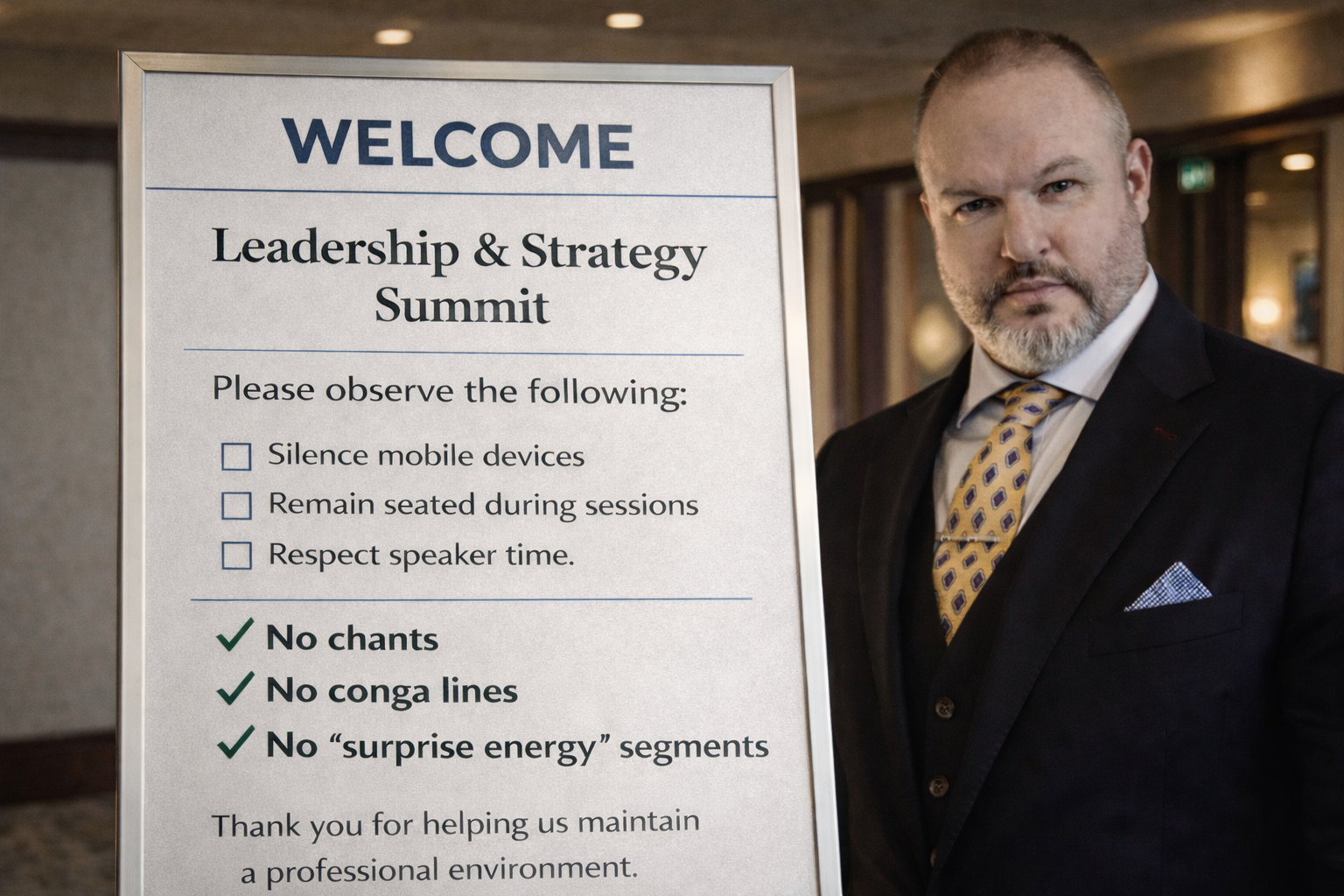
There’s a quiet category error that keeps showing up in professional events:
Camp counselor energy being applied to adult rooms.
Let me be clear up front: I am not anti-fun. I’m an entertainer and a speaker by trade. Creating engagement, delight, and memorable moments is literally my job.
But I also know the difference between entertaining adults and managing children.
Not every audience wants to be rallied, activated, or “brought together” through mandatory enthusiasm. Some rooms are there to think, decide, negotiate, or exchange real value.
The people in those rooms want stimulation and “edu-tainment” just as much (if not more) than anyone else. What they don’t want is a summer camp clown show. The effect of that kind of thing isn’t connection; it’s polite withdrawal.
Camp Counselor Energy Is Context-Specific
Camp counselor vibes can work brilliantly:
With some teenagers and most children
At certain retreats designed specifically for bonding
During some orientation weeks
In some environments where participation is the point
They do not automatically translate to:
Executive summits
Investor meetings
Academic conferences
Senior leadership offsites
Adults who operate at a high level tend to value restraint, opt-in participation, and emotional self-possession. When a room is managed as if it needs to be constantly “kept up,” people notice, and not in a good way.
When Enthusiasm Becomes Soft Supervision
There’s a recognizable pattern:
Call-and-response prompts
Group chants
Mandatory movement
“Everyone up on your feet!” moments
These techniques assume an audience that needs encouragement to engage, or supervision to stay present. That assumption is rarely flattering, and often inaccurate.
Senior audiences don’t need to be managed like campers between activities. They need to be respected as autonomous adults.
The Problem Isn’t Fun; It’s Infantilization
Humor is welcome. Warmth is welcome. Lightness is welcome.
What isn’t welcome is the implicit belief that attention is fragile and must be constantly propped up with exaggerated behavior.
When energy is imposed rather than invited, it creates a subtle but real downgrade in perceived seriousness. People may smile. They may comply. But internally, the room shifts from “we’re being taken seriously” to “we’re being handled.”
That shift is costly.
A Useful Calibration Check
Ask yourself one question:
Does this moment feel more appropriate for a leadership summit, or for a goofy icebreaker led by someone wearing a headset mic and an unblinking smile?
An even better question might be:
Is this activity in service of the audience’s actual goals, or in service of my own need to see visible engagement?
If it’s the latter, pause.
The most effective professional events don’t rely on hype to sustain attention. They rely on clarity, relevance, and trust in the audience’s maturity.
Energy Is a Tool, Not a Default Setting
Camp counselor energy isn’t evil. It’s just situational.
Applied indiscriminately, it signals anxiety about silence, discomfort with seriousness, or a belief that adults won’t engage unless treated like children. None of those signals inspire confidence in high-stakes rooms.
Great planners and facilitators understand this instinctively. They don’t run the room; they hold it.
They allow:
Silence when it’s useful
Participation when it’s voluntary
Engagement to emerge without pressure
Take the Room Seriously
If you want your event remembered for substance rather than spectacle, resist the urge to manage adults like campers.
Not every room needs cheerleading. Some rooms need judgment. Some rooms need restraint. Some rooms need to be trusted.
And when you get that right, the engagement you’re looking for shows up on its own.
Best of all:
No chants required.