
New York Trade Show Magician for Exhibitors Who Need Qualified Traffic
Gentry is a trade show magician whose specialty is mentalism, the branch of magic built on reading people. New York exhibitors bring him in for one job: find the attendees worth your team's time and deliver them to your booth already talking. He is based in Philadelphia, he has worked a Manhattan show floor, and his fee is all-inclusive, so the trip into the city is his to manage, not yours.
This page is for exhibitors and event marketers planning a booth at a New York show. If you are planning a corporate dinner, a reception or a private party in the city, the New York magician and mentalist page covers that work. For how his trade show engagements run in every market, see trade show presentations.
What a New York show floor asks of booth entertainment
New York exhibitions tend to sit in two kinds of space. The large shows run at the Javits Center on the far west side of Manhattan. Many technology and industry conferences run in smaller Manhattan venues, where the exhibit area is a ballroom, an event hall or a converted floor in an office district.
Both reward the same thing. Compared with the giant halls of Las Vegas, a Manhattan exhibit floor is often shorter, denser and more local. Attendees often live or work in the city. They step out to a meeting, come back after lunch, and leave early for the train. Your window with any one person is narrow, and the aisle is crowded with competitors asking for the same few minutes.
That changes what booth entertainment has to do. A spectacle that collects a crowd at the front of your stand fills the aisle, irritates your neighbors and rarely produces a conversation your sales team can use. What works on a compact floor is one-to-one and small-group contact: a performer who can stop a single attendee, earn their attention quickly, learn whether they are a fit, and make the introduction while the interest is fresh.
How Gentry works a booth in New York
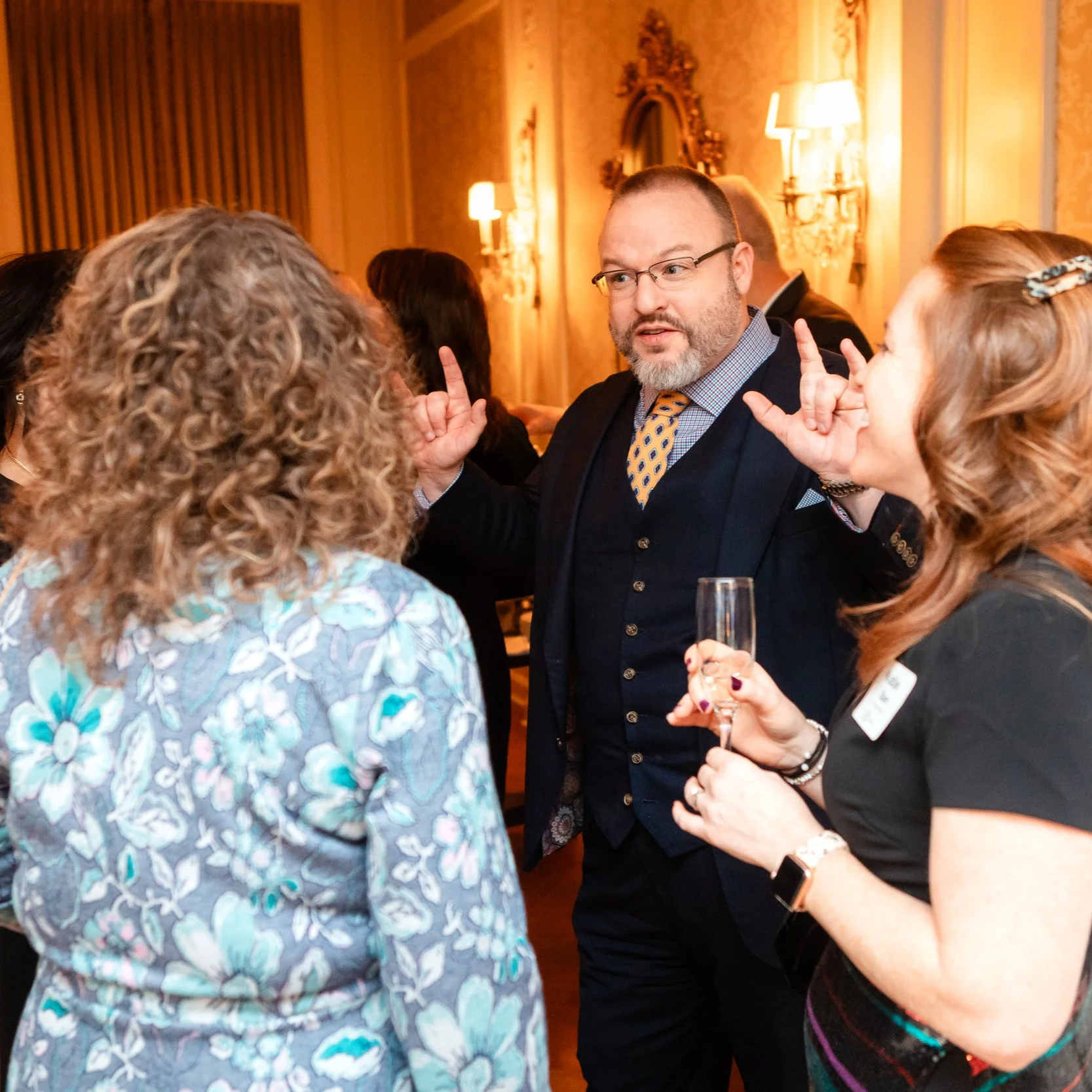
He works the aisles. Gentry moves through the floor, engages people well away from your stand, and walks the right ones back to your team. On a tight Manhattan floor, that reach matters. Your booth can be at the end of a row or behind a column and still receive steady, warm traffic, because he is going out to find it.
The performance is mentalism: demonstrations of reading choices, predicting decisions and drawing out what someone is thinking. It is close range, quick, and fits in the space between two booths. It needs no stage, no sound system and no special lighting. It ends with a person curious enough to ask what your company does.
Before the show he learns your positioning, your product and the questions your team uses to qualify a lead. Those questions get folded into the conversation in the aisle, so by the time he brings someone to you, he already has a sense of their role and whether they belong at your booth. Your staff takes it from there and handles the product discussion and lead capture. He handles the introduction.
His background shapes how that sounds. Gentry holds an MA in Rhetoric from Carnegie Mellon and taught at four universities: Carnegie Mellon, Temple, Duquesne and the University of Pittsburgh. Rhetoric is the study of how people are persuaded and how attention is held. On a show floor it shows up as an approach that feels like conversation rather than a pitch, which is what a New York audience, quick to walk away from a hard sell, responds to.
ONUG at the Penn District: a Manhattan trade show booth
On 22 October 2025, Lightyear Telecom brought Gentry to ONUG, held in Manhattan's Penn District. He worked the floor for Lightyear's booth, number 52, stopping attendees in the aisles and bringing them back to the Lightyear team for introductions.
Athena Ascione, Senior Events and Marketing Leader at Lightyear Telecom, described the result:
"Gentry was fantastic at our trade show booth. He didn't feel salesy or gimmicky, just personable, intelligent, and genuinely engaging. He drew people in naturally and created conversations that felt relaxed and authentic rather than forced. Attendees stayed longer, asked better questions, and were clearly interested in both the experience and our product. Multiple vendors and visitors told us he was a great find and asked how we discovered him. Several even mentioned they came back the second day specifically looking for him."— Athena Ascione, Senior Events and Marketing Leader, Lightyear Telecom
Two lines in that review speak directly to the New York problem. "Attendees stayed longer" is the scarce resource on a floor where everyone is between appointments. "Asked better questions" is the sign that the visit turned into a real sales conversation.
ONUG is a technology audience, and so is most of Gentry's trade show record. He has worked booths for cybersecurity companies at Black Hat and at Gaylord National, and for a developer-platform company at Caesars Forum in Las Vegas. Technical buyers are skeptical by training. Mentalism suits them because it invites them to work out what just happened, which is the same instinct that makes them good evaluators of your product.
Booking a trade show magician for the Javits Center or a Manhattan venue
New York shows come with their own logistics, and the simpler the entertainment, the easier the booth. Here is how a booking with Gentry typically runs.
Coverage. Book him for a half day, a full day, or the run of the show. Multi-day bookings let returning attendees find him again, as Lightyear's visitors did.
Footprint. He needs no dedicated floor space and no significant technical support. If your booth is a ten-by-ten in a crowded row, that is enough.
Credentials. Exhibitors usually register him as booth staff through the show's exhibitor portal, so he can work the floor under your company's badge. Your show's exhibitor manual sets the rules for this, and he works within them.
Briefing. A short call before the show covers your product, your ideal customer and your qualifying questions. If you have a booth number and a floor map, he will plan his routes around them.
Price. His fee is all-inclusive. Travel into New York and accommodation are built in, so there is no separate line for the trip from Philadelphia. Prices are quoted per engagement rather than published.
Timing. There is no minimum lead time. He can often step in at short notice when a plan changes or another performer falls through.
After the exhibit hall closes
A New York show rarely ends when the floor does. Exhibitors host client dinners in Midtown, hospitality suites near the venue, and receptions that run late into the evening. The same performer who spent the day bringing prospects to your booth can take the evening event, where those prospects meet him again in a setting built for longer conversation.
Gentry also delivers keynotes for conferences, built on his TEDx talk "Faking It IS Making It", and facilitates sessions for teams the day after a show. His stand-up mentalism show plays to rooms as small as five and as large as several thousand. For the full range of New York corporate and private events, see the New York magician and mentalist page.
Why New York exhibitors bring in a performer from outside the city
Gentry is a Philadelphia performer who works far beyond it. He has performed in dozens of countries and, in the United States, at trade shows from National Harbor to Las Vegas to Kissimmee. He served in the Peace Corps in Ghana and taught in Japan through the JET Programme. Working a room of strangers from many backgrounds is the job he has been doing for a long time.
For a New York exhibitor, the practical point is this: you are hiring a trade show specialist who prices the trip into the fee. The locations page lists the other cities where he has documented engagements.
Frequently asked questions
How much does a trade show magician in New York cost?
Gentry quotes each engagement individually, based on the number of days and hours on the floor. The quote is all-inclusive. Travel into New York and accommodation are part of the fee rather than added on top. Contact him with your show dates for a quote.
Can a trade show magician work a booth at the Javits Center?
Yes. His approach suits a large hall like the Javits Center because he works the aisles rather than waiting at the stand, which matters when a booth is far from the main traffic. He needs no stage or technical support, and exhibitors usually register him as booth staff under the show's own rules.
What does a trade show magician do at a booth in NYC?
He stops attendees in the aisles with close-range mentalism, holds their attention long enough to learn whether they fit your customer profile, and brings the right ones to your team for an introduction. Your staff handles the product discussion and lead capture.
Has Gentry worked trade shows in Manhattan?
Yes. He worked the floor for Lightyear Telecom's booth at ONUG in Manhattan's Penn District on 22 October 2025. Lightyear's Senior Events and Marketing Leader, Athena Ascione, wrote that attendees "stayed longer, asked better questions," and that several "came back the second day specifically looking for him."
How far in advance should we book a trade show magician for a New York show?
As early as your show dates are confirmed. There is no minimum lead time, though, and he can often step in at short notice when plans change.
Can the same trade show magician perform at our evening event in New York?
Yes. Exhibitors can keep him on for a client dinner, hospitality suite or reception after the floor closes, so the prospects he met during the day see him again in a more relaxed setting.
Check availability
If you are exhibiting at the Javits Center or a Manhattan venue and want qualified people arriving at your booth, send Gentry your show name, dates and booth number. Check availability.